


Your cart is empty
Don't know where to start?


SPORT

SPORT
by Simone Bisello
Running in the mountains is not just a matter of strong legs or mental endurance. Trail running takes the off-road athlete for hours through steep climbs, technical descents and uneven terrain, with environmental conditions that can change rapidly. In these circumstances, supplementation becomes the real secret to maintaining performance: knowing when, how and what to take can make the difference.
A trail can range from about 5 to 50 km, with an extremely variable energy expenditure, oscillating between 500 and 900 kcal per hour depending on intensity, elevation gain, sex and body weight. Don’t be fooled by distance: even shorter races, such as Verticals, which feature significant elevation gain in just a few kilometers, involve high energy expenditure, because the body works almost exclusively uphill, often close to maximum effort. Climbs push the body to work at its limit, while in descents the expenditure drops, but the muscles are still subjected to significant mechanical load.
To manage this constant alternation, the body relies on two main energy reservoirs:
In shorter trails, glycogen is the “exclusive fuel,” and it is essential to start with full stores. In longer distances, where the average intensity is lower, having initial glycogen reserves remains crucial: when they run out, there is a sharp drop in performance, the classic “wall” sensation well known to runners. That is why carbohydrates, and in particular those stored as glycogen, are fundamental to sustain performance also in trail running.
To face a trail at your best, it is essential to start well stocked with glycogen. In the days before, it is advisable to increase carbohydrate intake in the diet: those who train less or not every day can aim for 7–8 g per kg of body weight, while more experienced athletes accustomed to daily sessions can go up to 10–12 g per kg. It is important to choose easily digestible carbohydrates, such as white pasta, white bread or polished rice, avoiding wholegrain ones.
At the same time, it is useful to slightly reduce fat intake and keep proteins at the standard dosage of 1.5 g per kg of body weight, choosing lean proteins such as chicken, cod or turkey. In this way carbohydrate intake increases without excessively raising overall calories in the diet.
The pre-race meal is also crucial, to be consumed 2–4 hours before the start, with 150–200 g of net carbohydrates from easily digestible sources such as white bread or jam/honey, fruit, fruit juices. In this meal it is essential to avoid fiber, to limit any gastrointestinal discomfort during the run.
Even with this preparation, glycogen will physiologically deplete over time: in very intense activity it may happen after about two hours of effort. For this reason, carbohydrate supplementation during the race becomes indispensable, especially in long-distance events. Glucose-fructose 2:1 mixtures are particularly recommended, as they promote intestinal absorption and reduce the risk of gastrointestinal discomfort, frequent among runners.
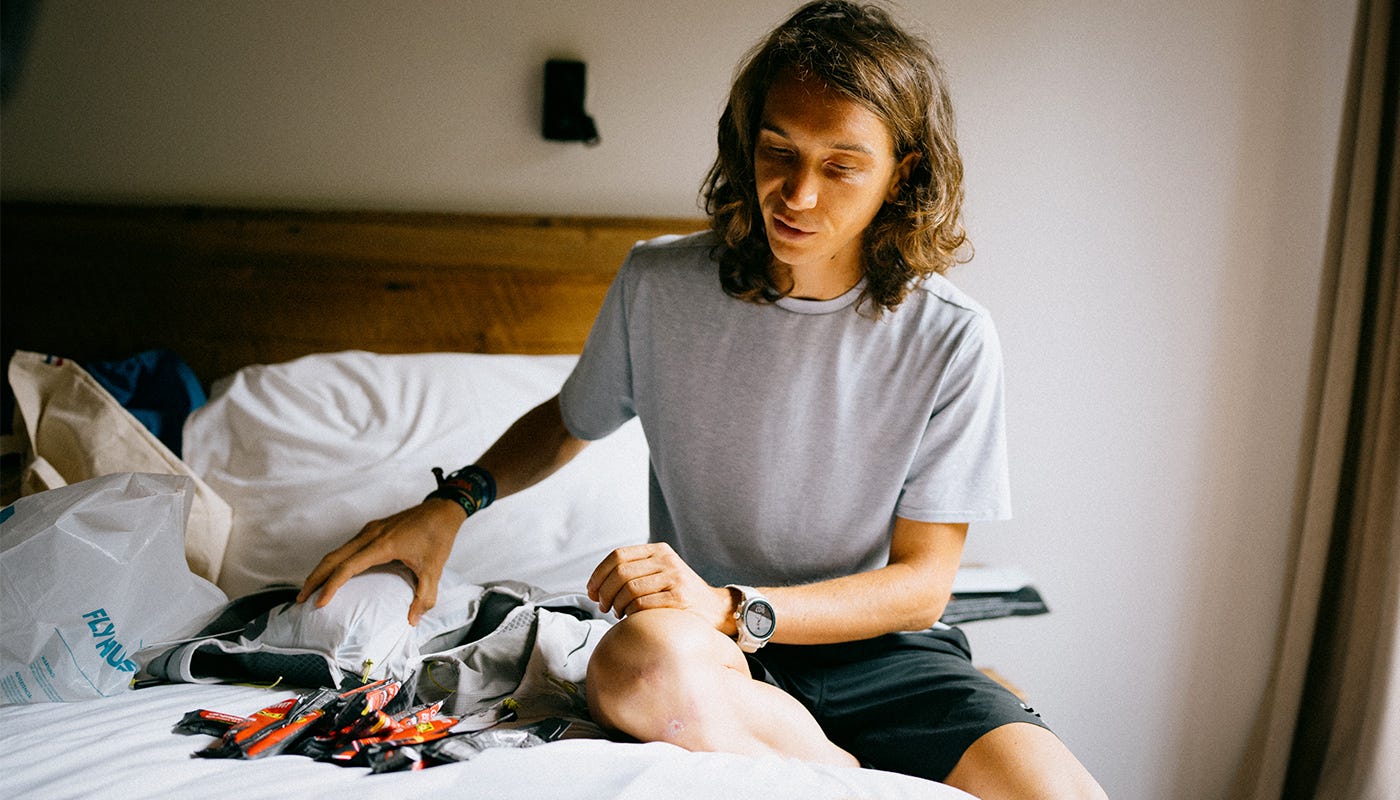
In shorter trails, lasting up to about one hour, carbohydrate supplementation is not strictly necessary. In these cases, a small pre-race portion of highly digestible carbohydrates, taken 5–10 minutes before the start, for example in the form of a jelly, can be useful to optimize energy availability.
As the duration increases, it becomes more and more important to support performance with a regular carbohydrate intake. For trails lasting up to 3–4 hours, the guidelines remain those of running, with an intake of up to 60 g of carbohydrates per hour. Well-trained athletes can exceed this threshold, reaching higher amounts (even 90 g/h) during particularly intense and prolonged trails.
Normally the intestine can absorb about 60 g of glucose per hour; using glucose-fructose 2:1 mixtures it is possible to go beyond this limit and reach 90 g or more grams per hour, optimizing energy intake.
In longer trails, over 4 hours, it is advisable to alternate different types of products, taking advantage of all available options: gels, bars, chews, jellies and drinks. Alternating consistencies is not only useful to cover energy needs, but also to prevent flavor fatigue, i.e. the loss of appreciation for repeated flavors and textures, which can lead to a reduction in energy intake during activity.
To counter flavor fatigue we can also:
Sodium and flavor fatigueDuring intense endurance activity, sodium losses can vary between 0.4 and 1.8 g per liter of sweat, depending on temperature, intensity and individual sweating characteristics. Excessive sodium loss can contribute to flavor fatigue, making foods and drinks less pleasant, as well as affecting several physiological functions. |
Alongside adequate sodium intake, it is essential to consume the right amount of fluids during activity. For optimal hydration, it is recommended to drink regularly about 200 ml of beverage (water or isotonic energy solutions) every 15–20 minutes, always adapting the volume to individual sweating and environmental conditions. In addition, it is important to drink 500–600 ml of fluids about two hours before starting the activity, to begin well hydrated.
Isotonic solutionsIsotonic solutions are a particularly advantageous choice in trail running. These are drinks with a concentration of salts and carbohydrates similar to that of blood: this makes them easy to absorb, without causing gastrointestinal discomfort typical of overly concentrated drinks. Thanks to their composition, they are very effective in promoting rapid and lasting rehydration. |
Nutritional recovery after a trail is essential to limit muscle catabolism and speed up energy replenishment. Immediately after the activity, a protein shake, preferably whey (milk serum proteins), with high biological value and rapid absorption, can be very useful.
Daily supplementation with omega-3 can help modulate inflammation and support recovery in runners subjected to prolonged stress. In the context of very long activities, post-activity intake of polyphenols from tart cherry can help counter oxidative stress and further promote recovery.
In ultra-distance events, which involve distances over 50 km and can last an entire day or even several days (for example races such as the UTMB® o il Tor des Géants, over 300 km!), managing energy and hydration correctly becomes more complex. In these competitions, energy expenditure can easily exceed 10,000 kcal over the course of the race, making a strategic nutritional approach essential.
During these activities, it is fundamental to maintain a constant energy intake to sustain performance and prevent energy drops. The guidelines of the ISSN (International Society of Sports Nutrition) recommend an intake of 200–400 kcal per hour. If this requirement is covered exclusively with carbohydrates, this means consuming 60–100 g per hour. However, constant carbohydrate intake in such prolonged activities can be challenging, due to fatigue, environmental conditions and digestive limits. In ultra trails longer than 8–9 hours, it can therefore be useful to also introduce proteins and fats:
All the more so at such long distances, neglecting hydration can have serious consequences. It is therefore essential to regularly consume fluids, about 200–300 ml every 15–20 minutes, adjusting the amount to environmental conditions and individual sweating.
In particularly long ultra trail races, it may be useful to manage hydration and energy separately: drink only plain water and take carbohydrates and salts through gels, bars or sodium capsules.
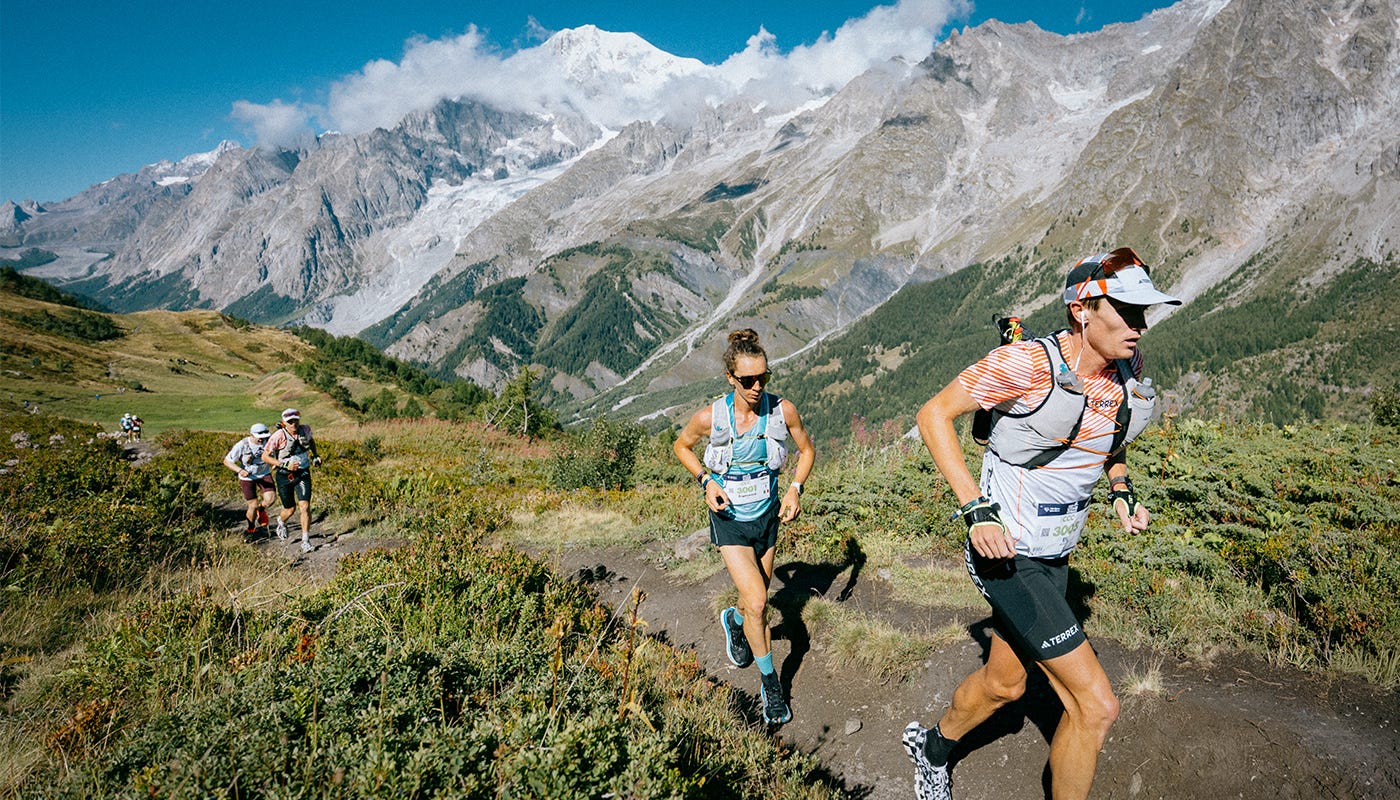
Magnesium losses through sweating are relative (about 12 mg/L), but in very long activities plasma levels may drop. Supplementing 50 mg of magnesium per liter of fluids consumed helps to support muscle function.
Caffeine can be a valid aid for alertness and concentration. In ultra-distance trails, it is advisable to take it at regular intervals, for example 100 mg per intake via an energy gel, up to a maximum of about 300 mg over 24 hours, especially in races that extend over several consecutive days. In any case, excessive amounts should be avoided as they could cause undesirable side effects.
After an ultra trail, the first step is always a protein shake with about 30 g of protein powder. Within an hour of finishing, it is then necessary to have a complete meal consisting of high glycemic index carbohydrates (white rice, bread, potatoes) and a lean protein source (chicken, turkey, cod), providing about 25–30 g of net protein, all dressed with a tablespoon of extra virgin olive oil (EVO).
Recovery after such a demanding race, however, is a process that takes time. In the following 3–4 days, the main goal is to replenish the accumulated energy deficit: for this reason, it is advisable to maintain a normocaloric or slightly hypercaloric diet. In this phase, antioxidant foods (such as berries, leafy green vegetables and cocoa) support the repair processes. In addition, increasing the intake of omega-3 through diet or supplements (up to about 2 g total of EPA and DHA) and continuing tart cherry polyphenol supplementation for 3–4 days makes the regeneration process even more complete.
ConclusionsTo face a trail, whether short or ultra-distance, nutrition is not a detail but a true ally along the entire route. To avoid being surprised by fatigue, here are the main points to keep in mind:
With the right nutritional strategies, fatigue turns into endurance, tiredness into strength, and every trail into an adventure to remember. |
- Jeukendrup, A. (2020). Nutrition for endurance sports: Marathon, triathlon, and road cycling. Human Kinetics.
- Thomas, D. T., Erdman, K. A., & Burke, L. M. (2016). Position of the Academy of Nutrition and Dietetics, Dietitians of Canada, and the American College of Sports Medicine: Nutrition and athletic performance. Journal of the Academy of Nutrition and Dietetics, 116(3), 501–528
- Kerksick, C., et al. (2018). ISSN exercise & sports nutrition review update: Research & recommendations. Journal of the International Society of Sports Nutrition, 15(38)
- Jeukendrup, A., & Killer, S. C. (2010). The myths surrounding pre-exercise carbohydrate feeding. International Journal of Sport Nutrition and Exercise Metabolism, 20(1)
- Sawka, M. N., Burke, L. M., Eichner, E. R., Maughan, R. J., Montain, S. J., & Stachenfeld, N. S. (2007). American College of Sports Medicine position stand: Exercise and fluid replacement. Medicine & Science in Sports & Exercise, 39(2), 377–390
- Burke, L. M., & Hawley, J. A. (2018). Swifter, higher, stronger: What’s on the menu? The science of nutrition and performance in elite athletes. Journal of Sport and Health Science, 7(1)
IMPORTANT NOTICE: the information provided is for informational purposes only and does not replace the advice of your physician or a qualified healthcare professional. The content is intended for healthy individuals: any dietary regimen or physical activity must be supervised by a qualified professional, as required by Italian law. Enervit S.p.A. assumes no responsibility, as the information is purely educational. Anyone wishing to begin a nutritional or physical activity program should first consult with their trusted specialist.


